Are Baby Gates Necessary? Where They Help Most
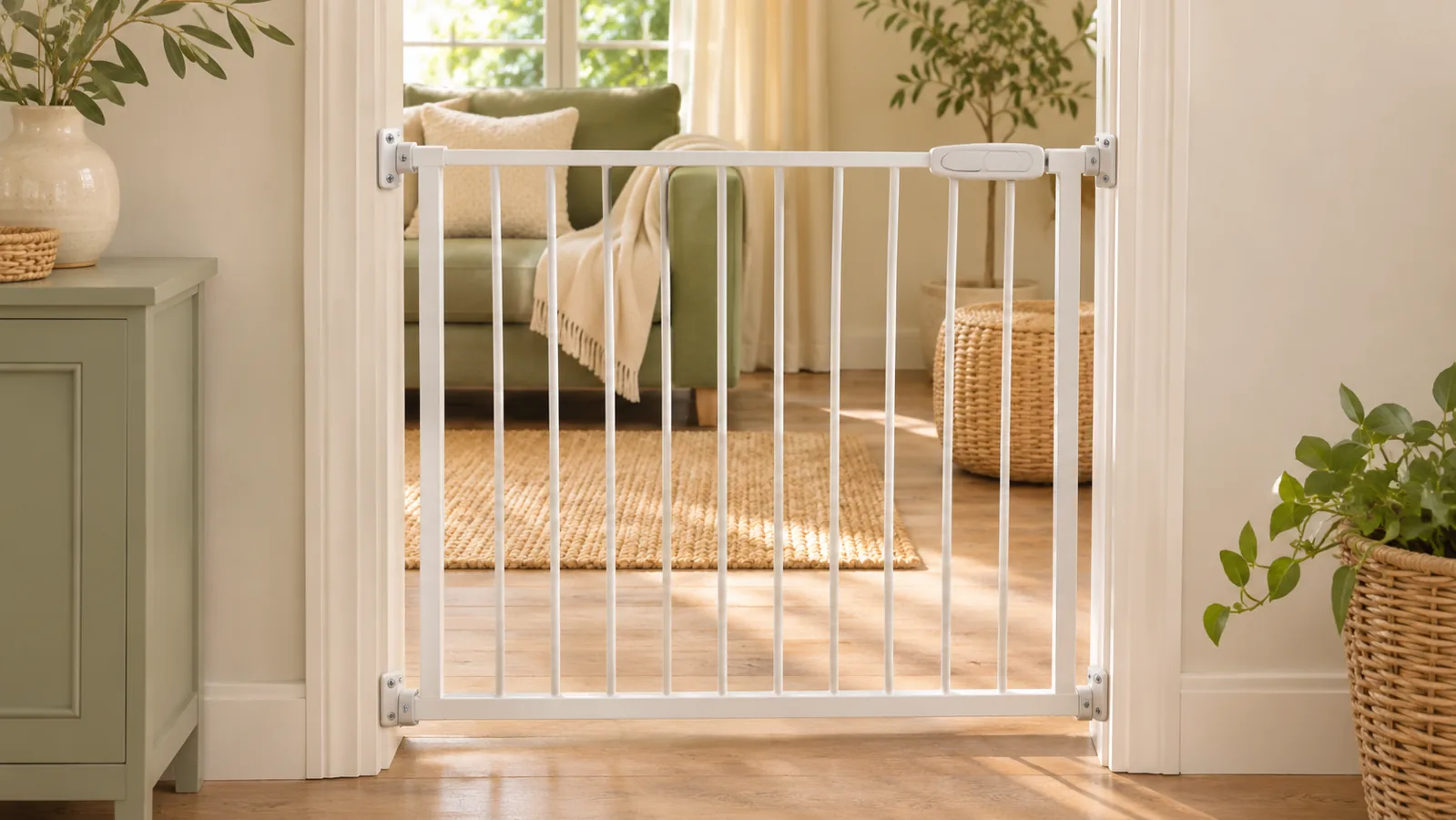
Start by walking the routes your child can reach and noting open stairs or rooms you need to block. A child safety gate can help at those boundaries. A room you can reliably close off with a door may need a different solution.
Check stairs and doorways first
The U.S. Consumer Product Safety Commission’s childproofing guide recommends gates to help prevent stair falls and restrict access to hazards. At the top of stairs, use only a gate that screws into the wall. Check that the exact model is intended for that location and follow its mounting instructions. Choose a gate designed for children.
Measure the opening and check the hardware
- Measure where the gate will attach and compare with the manufacturer’s stated fitting range.
- Check whether the mounting surface and any optional parts are approved for your setup. Follow the manual’s directions for attachments and extensions.
- Try closing and latching the gate the way caregivers will use it every day. Recheck it if it becomes loose or damaged.
Revisit the setup as your child grows
Follow your gate’s limits and instructions. If your child can climb over or open it, reassess how you restrict access to that area. Keep supervision and other childproofing measures in place. If you’re organizing other areas of the home, see our newborn preparation checklist.