Choosing a Chicco Stroller: Models, Travel Systems and Fit

A useful Chicco stroller comparison starts with your daily routine, not a brand-wide “best” label. The stroller you can fold, store and use as instructed may be a better choice than one with features you rarely need. This guide uses the current US manufacturer catalogue and documentation; it is not a hands-on ranking.
Start with the right category
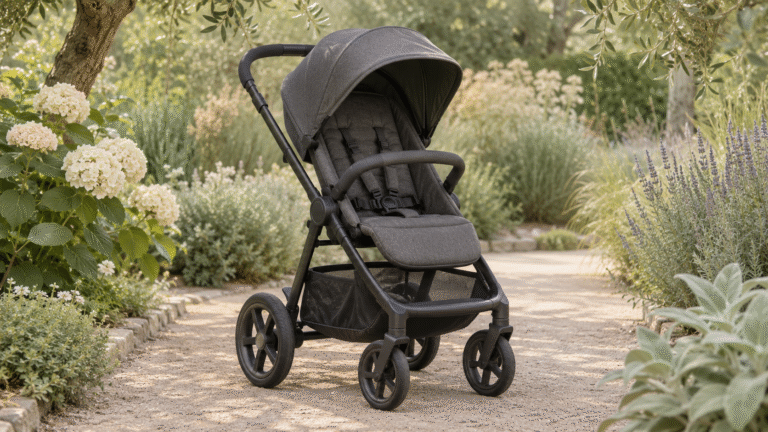
Chicco’s current stroller range separates full-size, lightweight, jogging and double strollers. It lists Bravo and Corso families, lightweight options such as Liteway and Urbino, Activ3 and TRE jogging strollers, and several two-child configurations. Being listed in the same category does not make their limits, folds or included accessories identical.
- For daily errands, try the fold, basket access and parking brake yourself.
- For travel, measure your storage space and check the airline’s current rules; “lightweight” does not establish cabin-baggage acceptance.
- For two children, check each seating position and permitted configuration, not just the total capacity.
- For running, use only a stroller and mode explicitly approved for it, with a child who meets all readiness requirements.
What a Bravo travel-system description means
The Bravo family page describes use as a car-seat carrier, travel system and toddler stroller. That explains the concept; it does not prove that every Bravo package includes a particular seat or accepts every infant-seat model.
Before buying, record the exact stroller, infant seat and any required adapter or attachment part. Confirm the pairing in the matching Chicco manuals. Check what is actually included in the package. A seat from the same brand is not automatically compatible with every frame, and an adapter for a similar name is not enough.
Chicco publishes separate instructions for Bravo 2014–2020 and 2021+ models, as well as a separate Activ3 manual. Use the version that matches the label and check the permitted activity in that manual. Confirm the exact seat and attachment instructions with Chicco before relying on a travel-system configuration.
Try the practical fit before deciding
Measure the folded stroller against your trunk or storage area, including the other things you normally carry. Try lifting it without a child in it, engaging the brake and opening the harness. Follow the folding instructions and keep children clear of hinges and moving parts.
Ask whether you can reach the basket in the configuration you will actually use. Check the basket and accessory load limits rather than hanging shopping bags from the handle. Accessories can change balance or interfere with the fold; use only approved arrangements.
Compare cost without inventing a winner
Write down the purchase price, required seat or adapter, replacement parts and return terms from the exact current listing. A travel-system bundle may be useful, but it is not automatically the lowest-cost or longest-lasting solution. Do not count on a toddler configuration or second-child accessory without confirming it is allowed and available for that model.
Before using an older stroller
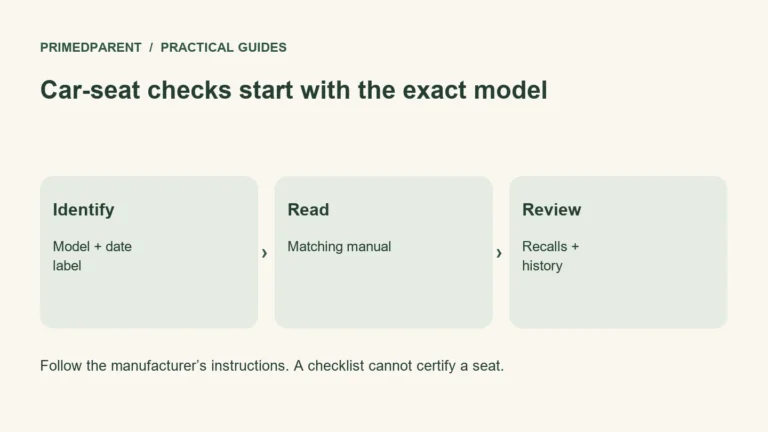
Match the identification label to the instructions, check for recalls and inspect the frame, wheels, brakes and harness. Stop if a part is damaged or missing. Use our convertible stroller checklist to record the exact model and configuration before checking the manual.
The best shortlist is a small set of exact models with confirmed child fit, compatible parts and a fold you can manage. This guide does not award Chicco a safety advantage over another brand or claim that we tested its products.
Sources reviewed November 10, 2026. General information; no hands-on testing or professional endorsement is claimed.