Elvie vs. Willow: Comparing Wearable Breast Pump Models
An Elvie-versus-Willow comparison needs model names. Elvie Pump is not Elvie Stride, and Willow Go is not Willow 360. This documentation-based guide compares their collection systems and everyday routines without claiming that one produces more milk or works better for every person.
Start with the collection system
Elvie Pump is an in-bra pump with its own collection bottles. Do not transfer its specifications to Stride, which uses a separate hub and tubing. Its current listing specifies 5 oz reusable bottles. Check the exact kit and compatible accessories before comparing prices.
The Willow FAQ distinguishes Willow Go’s reusable-container system from Willow 360’s bag and reusable-container options. Willow’s any-position leak-free claim is tied to the 360 with its specified spill-proof bags. It does not apply to every Willow pump or collection setup. Willow 360 bags and reusable containers each hold up to 4 oz per side. Willow Go uses its own reusable containers, with 5 oz standard containers and optional 7 oz Go containers. Match parts to the exact pump model before ordering. Confirm the exact compatible parts. Follow the posture and movement restrictions for your actual system rather than assuming “wearable” means leak-proof in any position.
Fit matters more than a suction contest
Check the manufacturer’s sizing guidance, available flange or insert sizes and how to align and support the pump. The same number printed on two products is not a guarantee that both will fit comfortably. Seek qualified lactation help for persistent discomfort, injury or concerns about milk removal.
A higher advertised vacuum number does not establish better output for an individual. The FDA’s pump guidance also explains that “hospital grade” is not a recognized FDA category. This guide therefore makes no gentle-versus-stronger brand ranking, supply promise or recommendation to tolerate painful suction.
Compare the whole working day
- Can you assemble and position the exact pump reliably?
- Can you access controls without depending on a phone at an inconvenient time?
- What does the current app actually record, and is it compatible with your phone?
- Where will you empty, clean, dry and store the milk-contact parts?
- Can you charge the system and obtain replacement parts where you live?
Treat app volume estimates as a feature to check, not a clinical measurement or proof of adequate intake. Battery duration varies with use; compare the manufacturer’s stated conditions and avoid planning your only pumping option around an untested session count.
Cleaning is part of the comparison
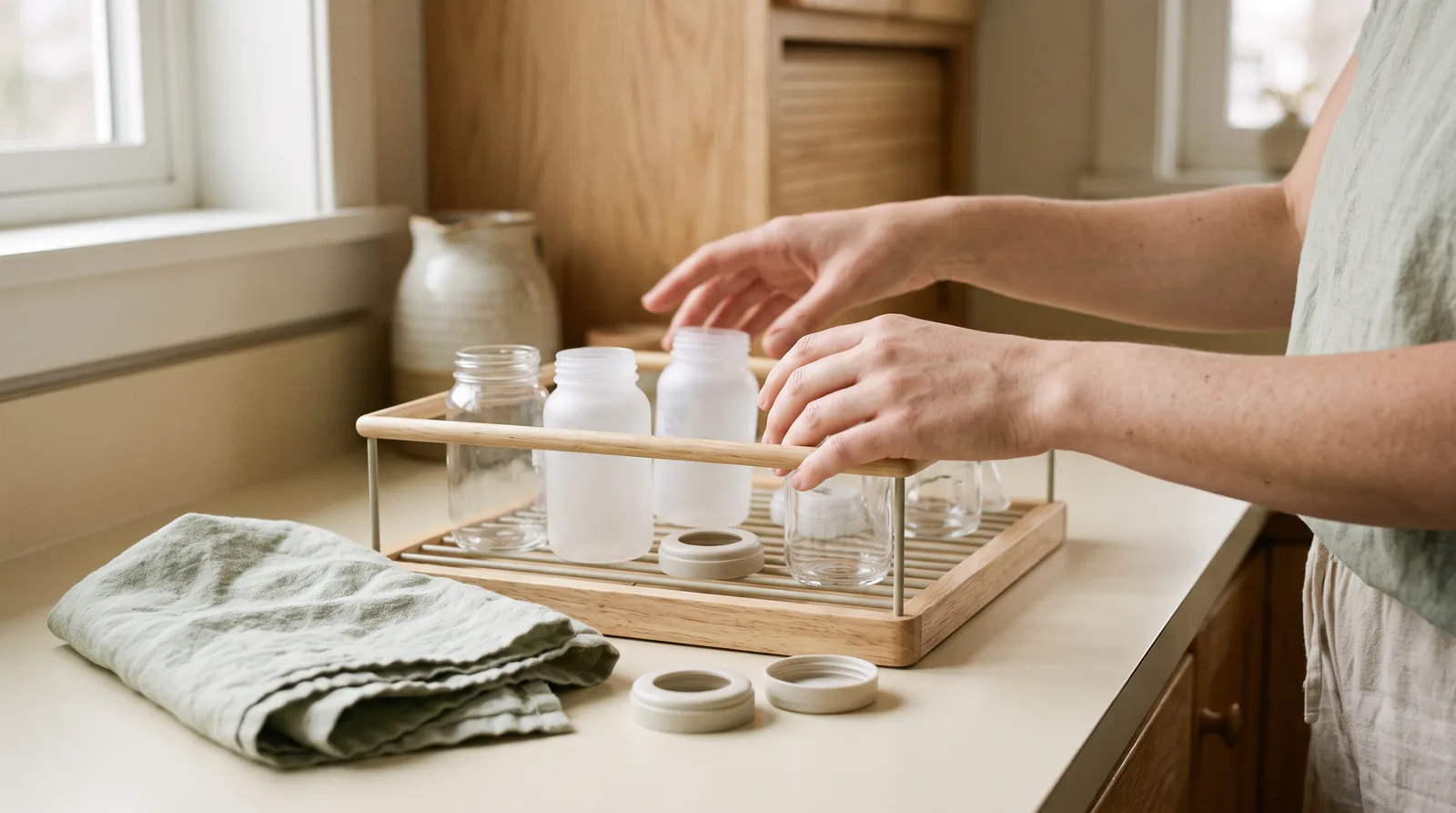
Set aside time to take apart and clean the parts for your exact pump. Elvie Pump separates its dry electronic hub from its washable parts. Willow Go has a removable flange, container bowl and back, duckbill and diaphragm. Willow 360 has separate first-use instructions for its flange, Flextube and reusable container. The collection bags still leave parts to clean. Use the instructions for your model and collection setup to check which parts can go in the dishwasher and how to sanitize them.
The CDC cleaning guide recommends cleaning milk-contact parts after every use, and recommends daily sanitizing for extra protection, especially for babies younger than 2 months, babies born prematurely, or babies with weakened immune systems. Follow the model manual for which parts can be sanitized and how. Plan adequate washing and complete drying rather than relying on a shortcut between sessions. Follow current CDC milk-storage guidance after collection; pumping into a container does not establish how long milk can remain warm.
Compare ongoing costs and support
Record the actual kit price, required sizes, replacement parts, optional bags, warranty and return restrictions. Ask your insurer about the exact model, approved suppliers, any required prescription or authorization, and your out-of-pocket cost. HealthCare.gov explains the U.S. breast-pump benefit, including plan differences in timing, rental and pump type. Prices and coverage are omitted here because a dated quote is not a reliable purchase promise.
Do not buy a used single-user pump on the assumption that replacing visible parts makes sharing safe; the FDA cautions against sharing pumps not designed for multiple users.
Choose a shortlist based on fit, collection preferences, cleaning facilities and available support. No hands-on noise, output, suction or battery test was performed for this comparison. A lactation professional can help assess an individual pumping problem that product specifications cannot resolve.
Sources reviewed November 10, 2026. General information; no hands-on testing or professional endorsement is claimed.